
The Po, the road, the ridge
Three parallel bands a few dozen kilometres wide, and an Apennine range nobody expects to be this high.
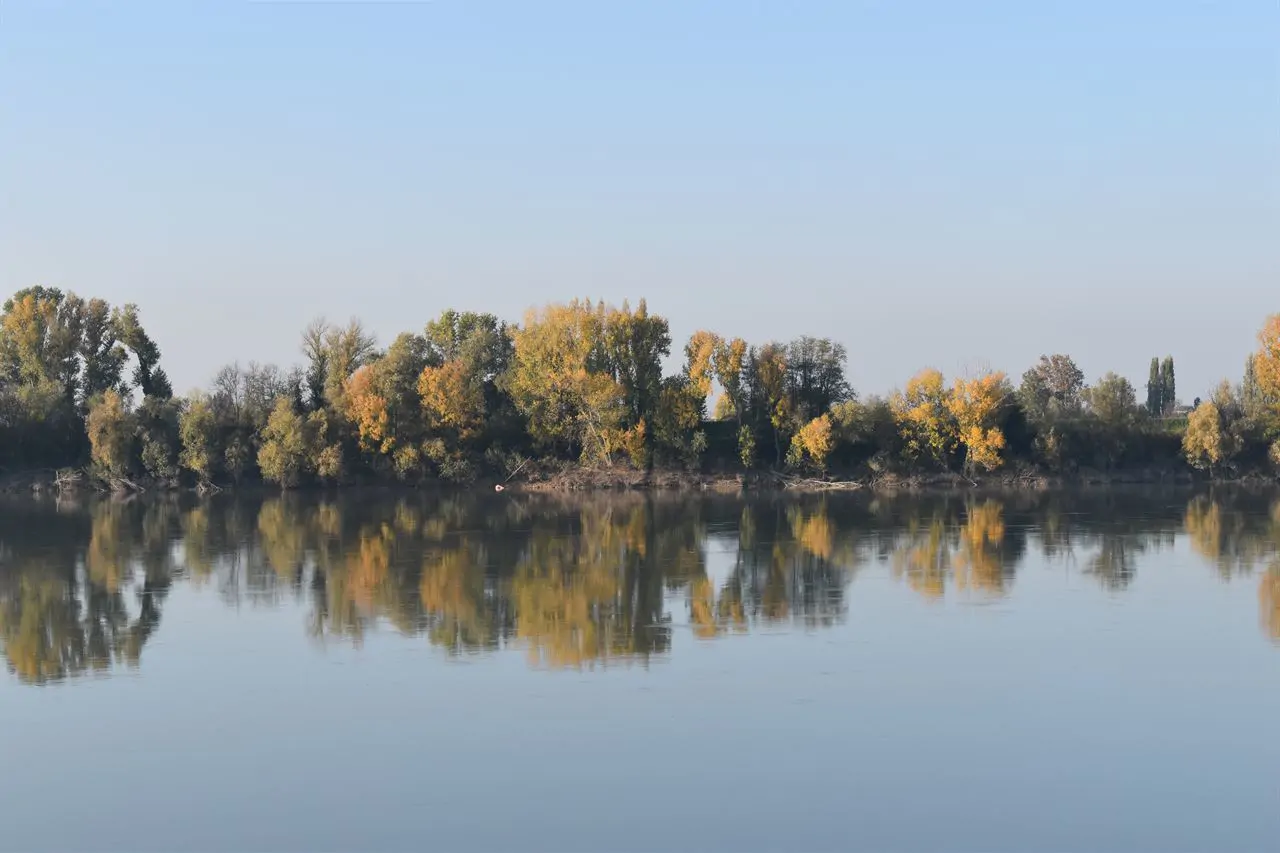
Seen from above, Emilia Romagna is made of stripes. The first is the Po, which closes it to the north for nearly three hundred kilometres and is no ordinary river: it is a border, a continuous embankment and a landscape of its own, with flood meadows, poplar groves and villages built up on the rise. The second is the reclaimed plain, all fields and canals. The third is the Via Emilia with its cities. Then the hills, and finally the mountains.
The plain is not empty
Those who cross it on the motorway find it dull, and they are not entirely wrong: at a hundred and thirty an hour it is one shed after another. Seen from the back roads it is another thing. The lower Parma and Reggio country is the land of culatello and of walled farm courtyards; the lower Modena and Ferrara country is all reclaimed land, with pumping stations and canals running higher than the fields; around Ferrara you can cycle for days without a climb, which is one reason cycle touring really works here.
The Apennines, which are real mountains
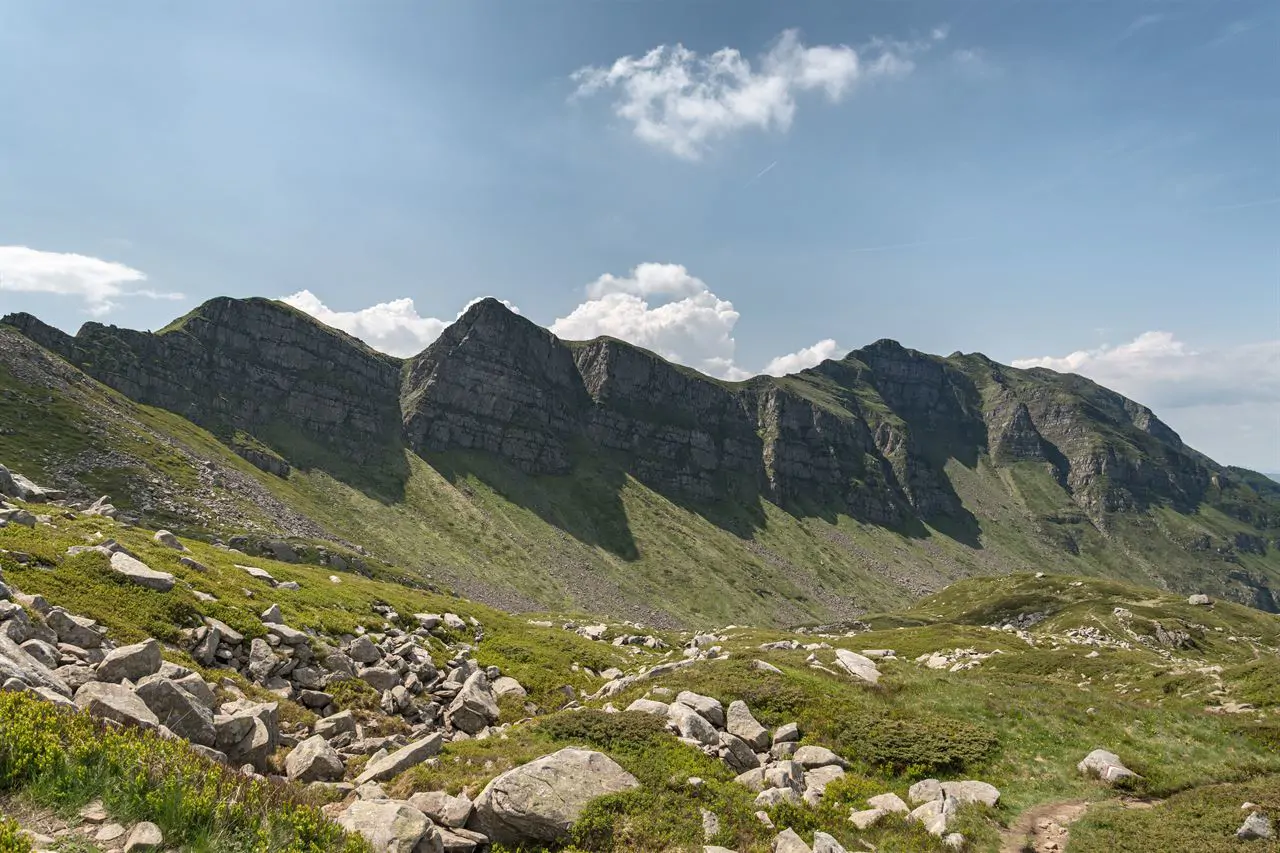
The ridge dividing Emilia from Tuscany passes two thousand metres at several points: Monte Cimone reaches 2,165, Monte Cusna 2,121, Corno alle Scale stops at 1,945. These are mountains of beech woods, high pasture and small lakes left by the ice: the Hundred Lakes above Parma, Lago Santo, Lago Scaffaiolo. Two national parks, the Tuscan-Emilian Apennines and the Casentino Forests, hold the best parts together.
What surprises people is the distance. Bologna to Corno alle Scale is seventy kilometres, Reggio to Cusna eighty, Parma to Lago Santo sixty. In July you go from thirty-five degrees on the plain to barely twenty at fifteen hundred metres in an hour and a half of driving.
The coast and the delta
The shoreline is low and sandy from end to end, and to the north it dissolves into the Po delta: brackish lagoons, channels, sand ridges and a quantity of birds unmatched in Italy. It is a landscape that resembles nothing else in the region, and indeed it is a Unesco biosphere reserve. Those who go by bicycle or by boat understand it better than from a car.